The short answer
Recovery is the period when treatment reactions settle; results refer to later cosmetic change. Symptoms and duration vary. Compare your course with the instructions from your clinician, and seek advice when symptoms worsen or do not match that plan.
By Microneedling Resource · Updated September 27, 2026 · AI-assisted research and writing. This educational page has not been medically reviewed.
On this page · Why fixed day-by-day promises mislead · Keep a short recovery record · Recovery is not permission to repeat · Track the direction of recovery · Keep researching · Sources & evidence notes
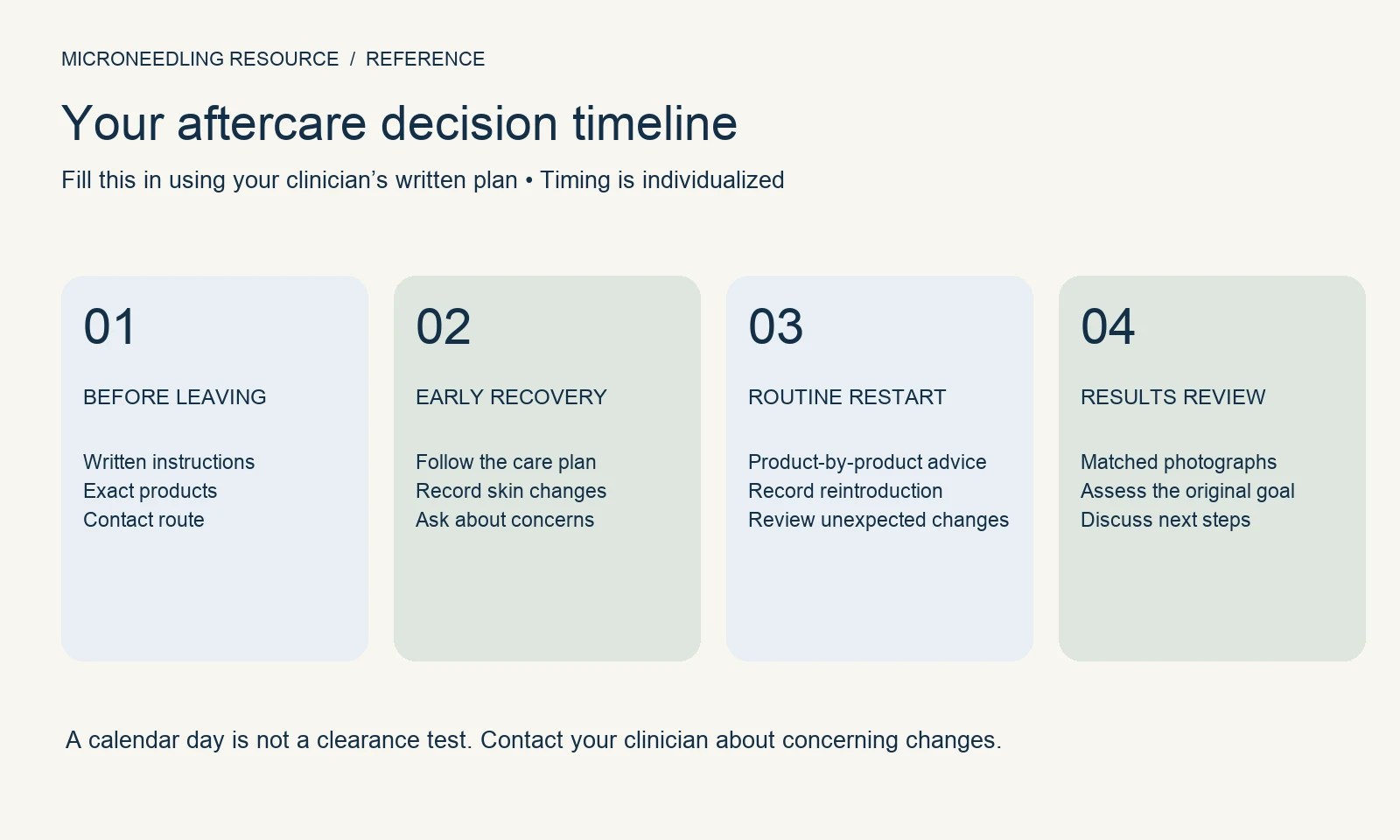
| Stage | What to monitor | Decision |
|---|---|---|
| Immediately afterward | The reaction explained by the provider | Follow the written plan and clarify missing instructions |
| Early recovery | Direction of redness, discomfort, dryness or swelling | Improving versus worsening matters more than an internet deadline |
| As skin settles | Comfort and tolerance of prescribed aftercare | Ask before restarting irritating products |
| Later follow-up | Persistent color or texture changes | Have unexplained changes assessed |
| Results review | Standardized comparison with baseline | Use the results guide, not acute symptoms, to judge benefit |
Why fixed day-by-day promises mislead
Treatment intensity, device category and individual response vary. The AAD describes reactions often settling over days to a week, while FDA guidance notes that some effects can last longer. Neither replaces the course described for your particular treatment. RF procedures need their own instructions.
Symptoms that need attention
Worsening pain, spreading redness, discharge, fever or a severe unexpected reaction warrant contact with a healthcare professional. Rapidly progressing or severe symptoms need urgent care.
Keep a short recovery record
Record when a symptom started, whether it is improving, products applied and any associated symptoms. If you send a photo to your clinician, use consistent lighting and include timing. Do not edit the image to make redness less visible.
Recovery is not permission to repeat
Skin looking calmer does not by itself establish that another treatment is appropriate. Follow-up and the treatment objective should govern the next decision.
Track the direction of recovery
A timeline is more useful when it records change rather than only the day number. Use the log to communicate clearly with your clinician. Do not wait for a future day on a chart if you are concerned now.
| Record or decision | What to write down |
|---|---|
| Date and time | When the observation was made. |
| Appearance | What is visible and where. |
| Sensation | What you feel and whether it is improving. |
| Products | What was applied and when. |
| Action | Advice received and any follow-up arranged. |
Why does this page avoid a universal “fully healed” day?
Different procedures and people recover differently. A fixed date can be misleading if it is treated as permission to ignore symptoms or restart products. The treating clinician’s assessment matters more than the label on a timeline.
Keep researching
- Microneedling Results: How Long Does It Take?
- Microneedling Aftercare: Complete Guide
- Microneedling Aftercare Timeline
- Microneedling Side Effects, Risks & Contraindications
Sources & evidence notes
- American Academy of Dermatology: Microneedling
- FDA: Benefits, risks and safety
- FDA: Radiofrequency microneedling safety communication
Sources checked September 27, 2026. Linked regulatory and research sources describe their own populations and procedures; they do not establish that every commercial device or serum is equivalent.

