The short answer
Microneedling uses small needles to create controlled punctures in skin. It is a medical procedure when it penetrates living tissue to change its structure. Device type, treatment goal and provider training matter more than the broad label “microneedling”.
By Microneedling Resource · Updated September 27, 2026 · AI-assisted research and writing. This educational page has not been medically reviewed.
On this page · Start with the treatment you mean · What can it help with? · What a worthwhile consultation should answer · How to use this resource · Build your consultation brief · Keep researching · Sources & evidence notes
Start with the treatment you mean
Mechanical microneedling, radiofrequency microneedling and non-penetrating cosmetic tools are different categories. A claim about one should not automatically be applied to another. Ask for the exact device name and the intended treatment area before comparing results.
| Stage | What happens | What to clarify |
|---|---|---|
| Assessment | A clinician evaluates the concern and medical history. | Is this a scar, pigment change or another condition? |
| Treatment | A selected device creates controlled skin injury. | Which device, body area and indication? |
| Recovery | Skin reactions and aftercare need monitoring. | Which symptoms are expected and who do you call? |
| Reassessment | Results are assessed after healing and remodeling. | When will photographs and outcomes be reviewed? |
What can it help with?
Some devices have FDA clearance for particular scar and wrinkle indications. That does not mean all devices are cleared, all body areas are covered, or every advertised use is supported. Clearance belongs to a specific product and intended use. A professional can explain whether the proposed use matches its labeling.
What a worthwhile consultation should answer
Bring a short list of goals and any history of unusual scarring, cold sores, skin disease, slow healing, medication use or prior reactions. Ask what improvement would count as worthwhile, what alternatives exist, and what the total course may cost. A treatment plan should include recovery and follow-up, not just a session count.
Three distinctions to keep
A marketed product is not necessarily a cleared device. A serum ingredient is not evidence of procedural compatibility. Early swelling is not proof of lasting collagen improvement.
How to use this resource
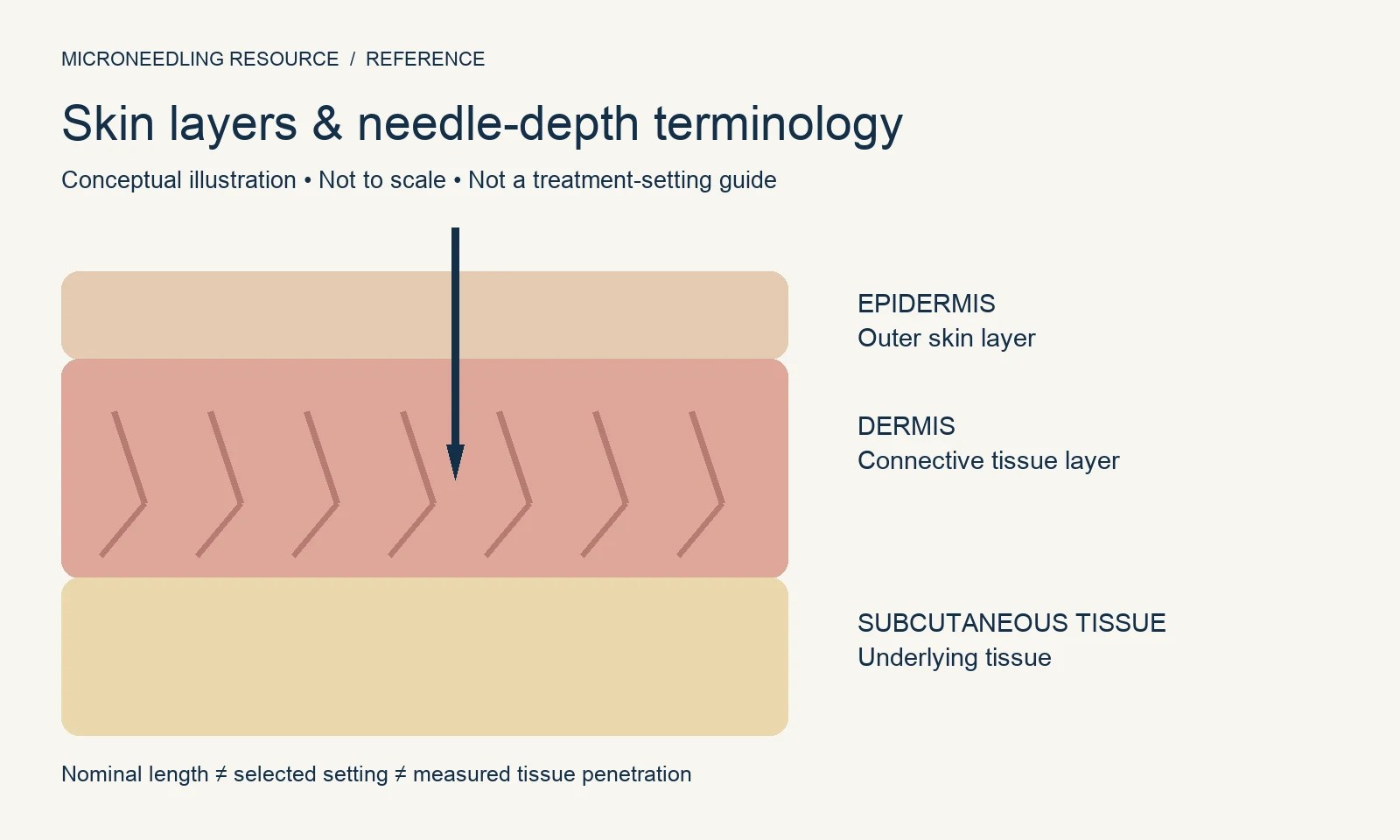
Start with benefits for an evidence overview, then choose a treatment-goal guide. Use the pen and depth references to understand terminology. Read risks and aftercare before making a booking. If you are considering home use, read the dedicated home-versus-professional comparison.
Build your consultation brief
A useful consultation starts with a precise concern. “Better skin” is difficult to evaluate; “less visible depressed cheek scars in ordinary daylight” gives you and your clinician something concrete to discuss. Write down the outcome you hope for, the downtime you can accommodate and the questions that would change your decision.
| Record or decision | What to write down |
|---|---|
| Goal | Describe the feature you want to change and where it appears. |
| Proposed treatment | Record the exact device, whether it uses RF and who will perform the procedure. |
| Alternatives | Ask about doing nothing, skincare and other appropriate treatments. |
| Full course | Ask about visits, recovery, total cost and reassessment. |
| Follow-up | Get a contact route and a plan if recovery differs from expectations. |
What would make the consultation incomplete?
A price or package alone is not a treatment plan. You should understand the proposed treatment, its limits, the alternatives and how problems will be handled. Keep unanswered questions on the page rather than treating a rushed answer as consent.
Keep researching
- Microneedling Benefits: What the Evidence Supports
- Microneedling at Home: Complete Guide
- Microneedling Side Effects, Risks & Contraindications
- Microneedling Pen Guide
- Microneedling Aftercare: Complete Guide
Sources & evidence notes
- FDA: Benefits, risks and safety
- FDA: Microneedling devices
- American Academy of Dermatology: Microneedling
Sources checked September 27, 2026. Linked regulatory and research sources describe their own populations and procedures; they do not establish that every commercial device or serum is equivalent.

